

“A floor” can be used to refer to a group of people, connected by their residence on the same level of a building.
2017. New friends said I might like the uninhabited house at the bottom of the knoll. Go down Laughing Bird Hollow, near the tunnels made of rhododendron, before the paths to the crab apples and pines, there is Laurel. Appearing each time on the left, just as I thought I must have missed it. Two doors led to the basement, one reddish, the other peeling white. The siding so covered in growth the hill seemed uninterrupted. Up the gravel path. Touch-shined oval knob. Always remembering to close the door until it swelled too far to fit its frame. Once left open, the space filled with currents of brown leaves.
2003. Eclectic two-story U-shaped structure. Connected shed roof addition. One-story side-gable block. Full-width porch. Board-and-batten siding. Standing-seam metal roof. Stone and concrete foundation. Four-over-four double-hung sash windows.
Inside, dark wood paneling saturated enough to tell, in contrast, how scratched the floor had become. Turn left to the kitchen, whose windows eventually fell out, heavy glass reclining on the porch. Two doors that cannot be opened at the same time, another room on the left, drywall hanging off faintly green paneling. The room with the windowed wall, which seemed to float at that time of day when their frames mirrored shadows onto the floor. The boards sank and rose in waves. Rooms tinted with that softness light takes on through leaves.
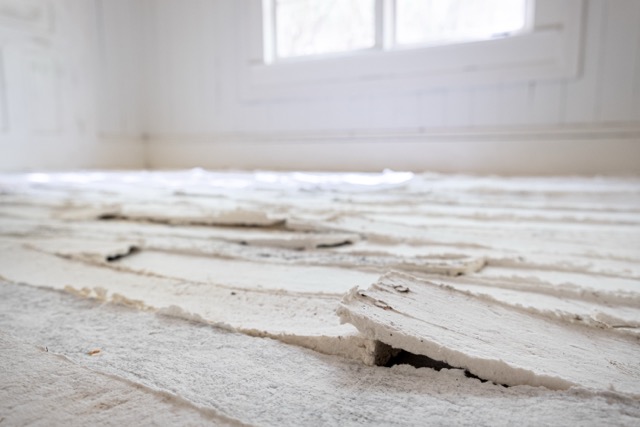
SR Lejeune, A floor for Laurel, 2019, photograph by L Autumn Gnadinger
The language of historical assessments differentiates a “building” from a “structure.” A structure is not primarily concerned with providing human shelter. All buildings are structures, but not all structures are buildings.
One visit I noticed the vines had stretched across the ceiling—with a speed plausible in this place where time condensed. It took until the leaves began to wrinkle for me to notice they had been stapled there, streamers of sorts from a party that was never quite cleaned up. Later I heard from several of Laurel’s former residents that those vines had been competing for space long before the house was put out of use. The structure was well on its way to being taken back before it was left alone.
Both buildings and structures can be deemed “contributing” if they have something considered more broadly relevant to tell us.
In 2019, I installed a cast paper floor in one of the rooms in Laurel Cottage (built 1905, acquired in 1964 by what is now called the Penland School of Craft). Tracing back, Laurel was home to a long list of Penland staff, resident artists, and interns. They have told me that the space I filled with floor once functioned to support a bedroom, nursery, studio. But there are many gaps.
How to keep wearing a place that has been worn out.
To be categorized as contributing does not mean a structure will necessarily be preserved.
I thought of my paper layer like fresh paint. With each coat the mass of a structure grows. Spiderwebs and finger smudges are sealed in, sedimentary striations that render rooms smaller over time. I am not sure I will find out how Laurel became Laurel, if a building must become thick enough to solidify into a name.
Peeled back, I took my paper layer with me, moving with these boxes nine times between 2019 and 2025.
Laurel was demolished in 2022.
Last time I visited there were a few chips of paint and blue ghost fireflies nesting, their lights rambling and low.
SR Lejeune

SR Lejeune, A floor for Laurel, 2019, photograph by L Autumn Gnadinger
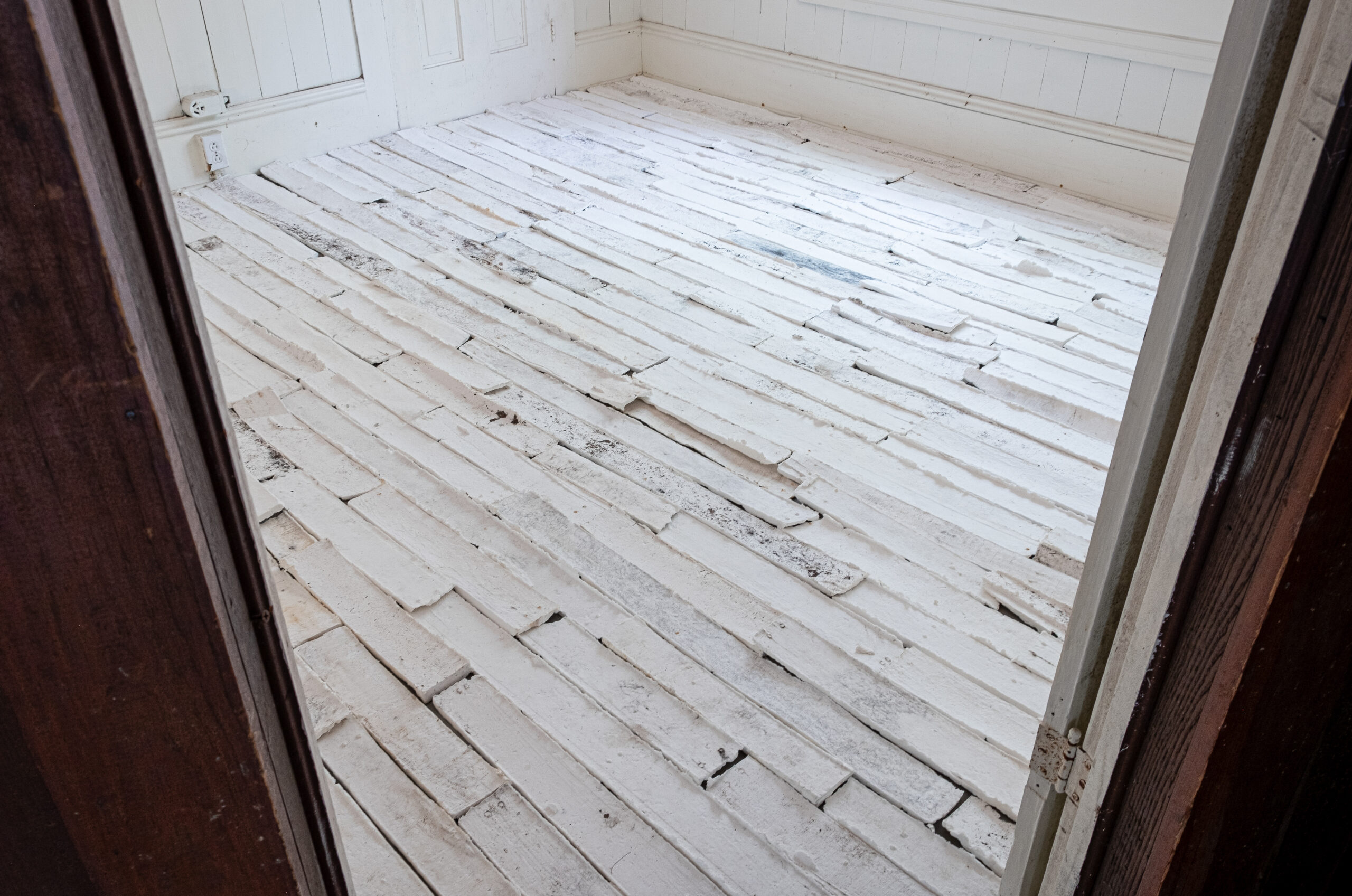
SR Lejeune, A floor for Laurel, 2019, photograph by L Autumn Gnadinger
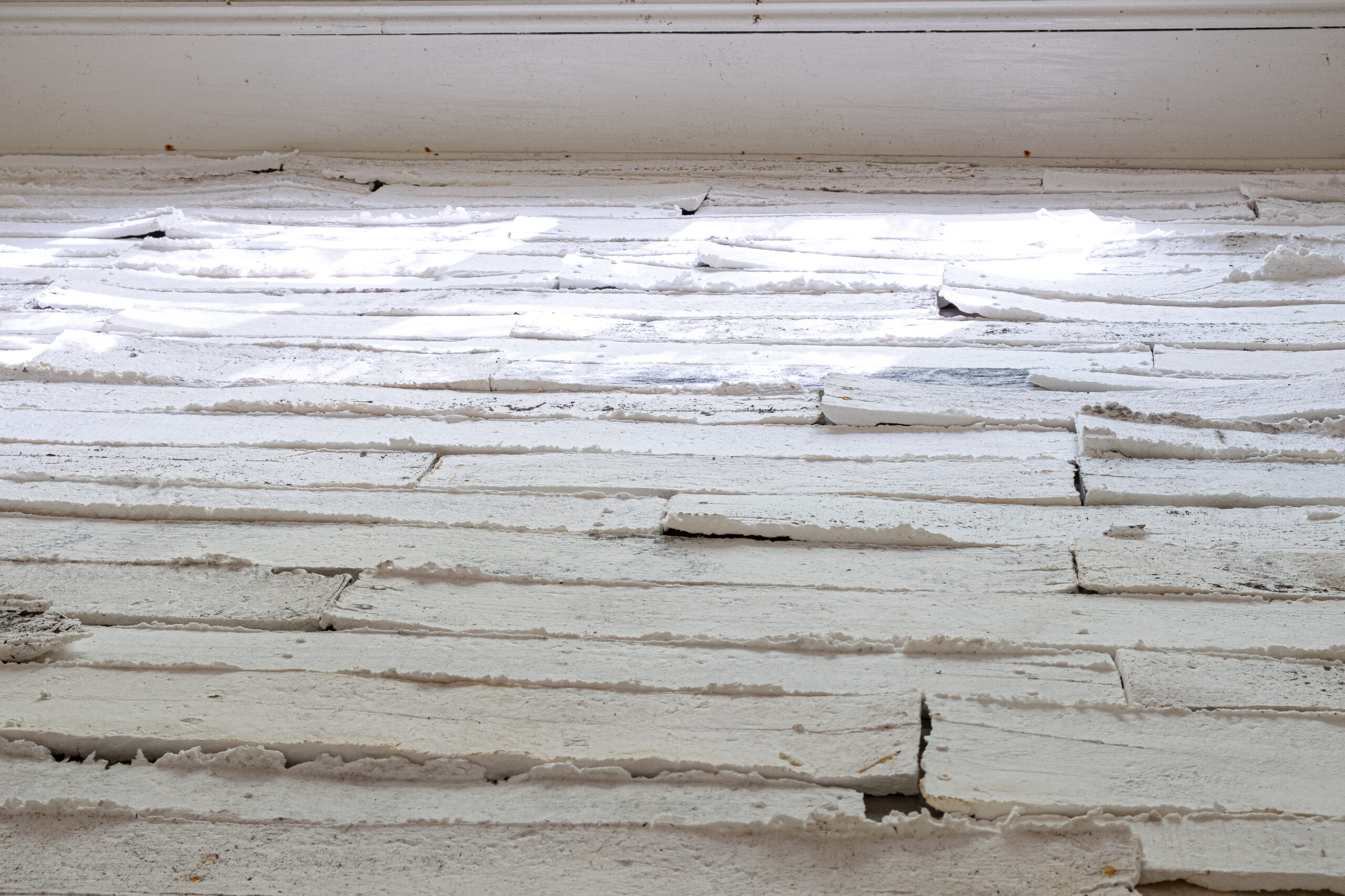
SR Lejeune, A floor for Laurel, 2019, photograph by L Autumn Gnadinger
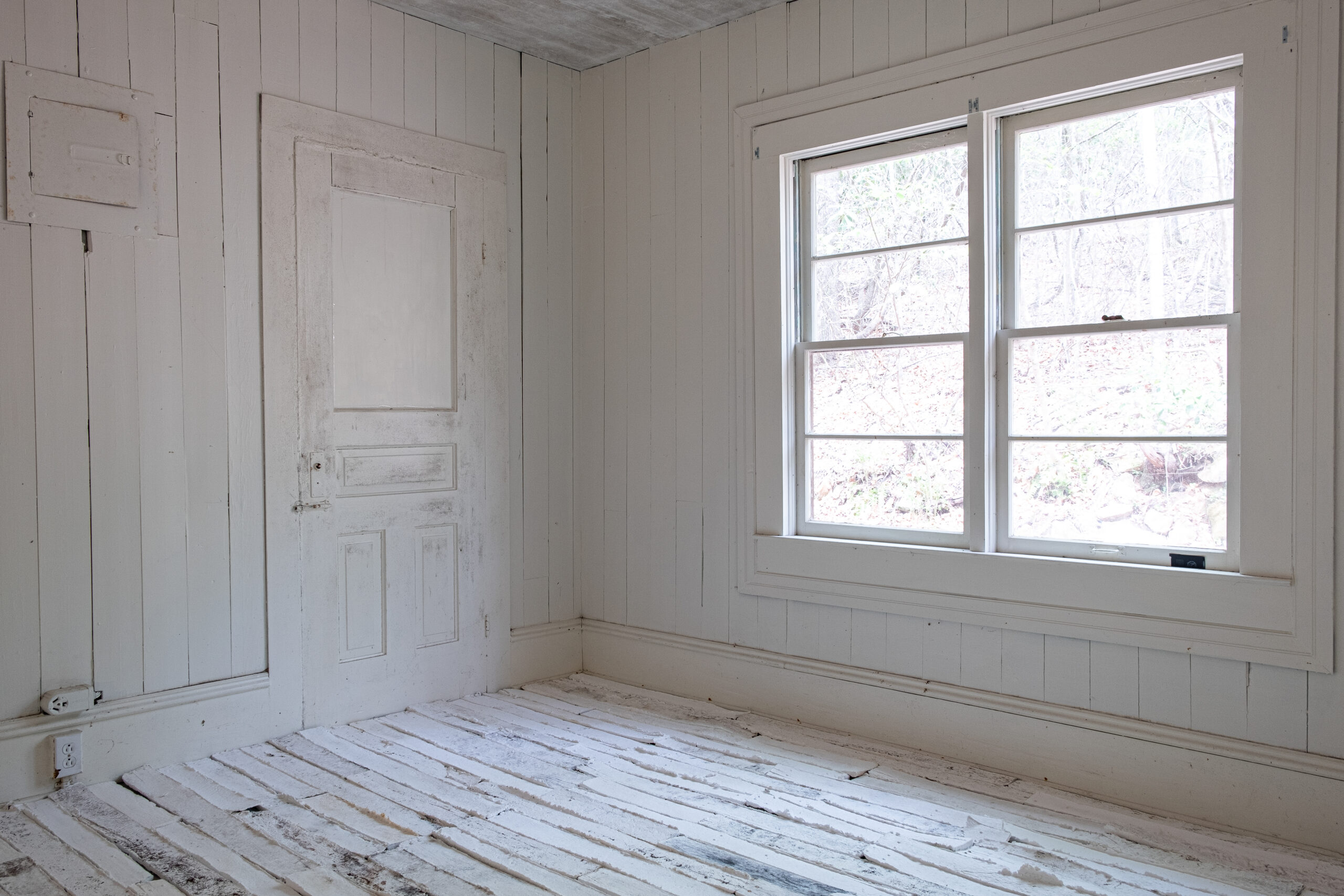
SR Lejeune, A floor for Laurel, 2019, photograph by L Autumn Gnadinger
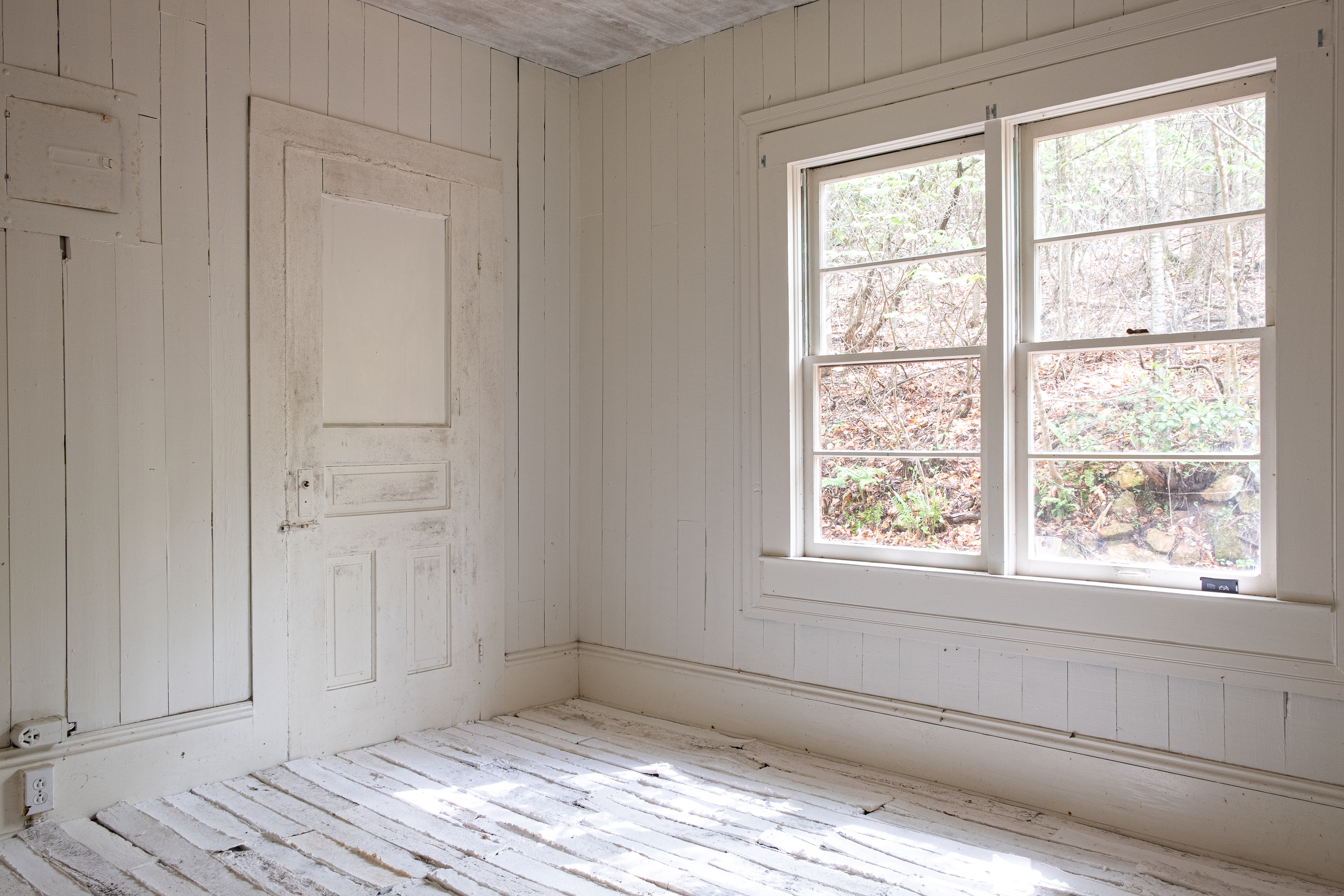
SR Lejeune, A floor for Laurel, 2019, photograph by L Autumn Gnadinger
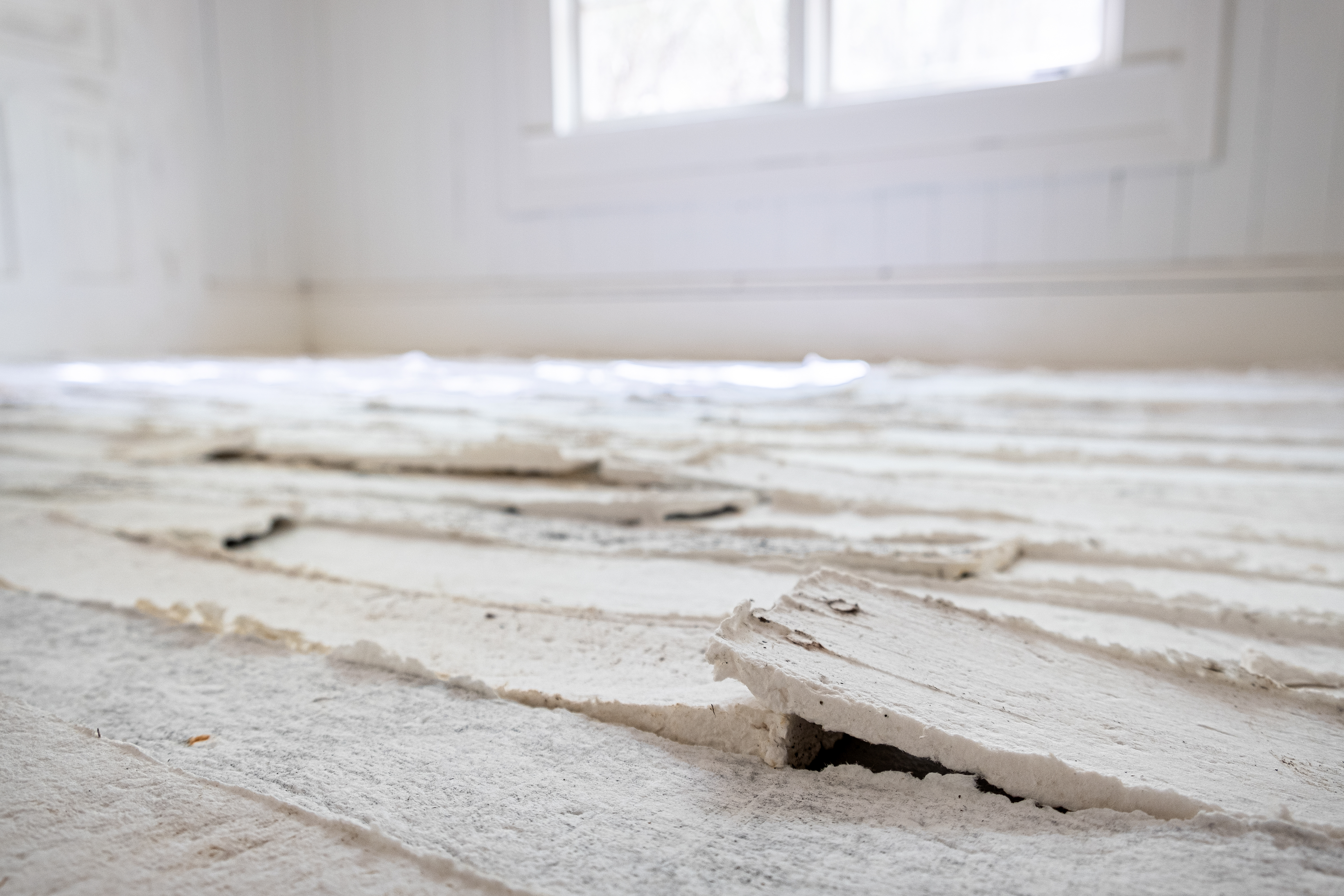
SR Lejeune, A floor for Laurel, 2019, photograph by L Autumn Gnadinger
About the artist
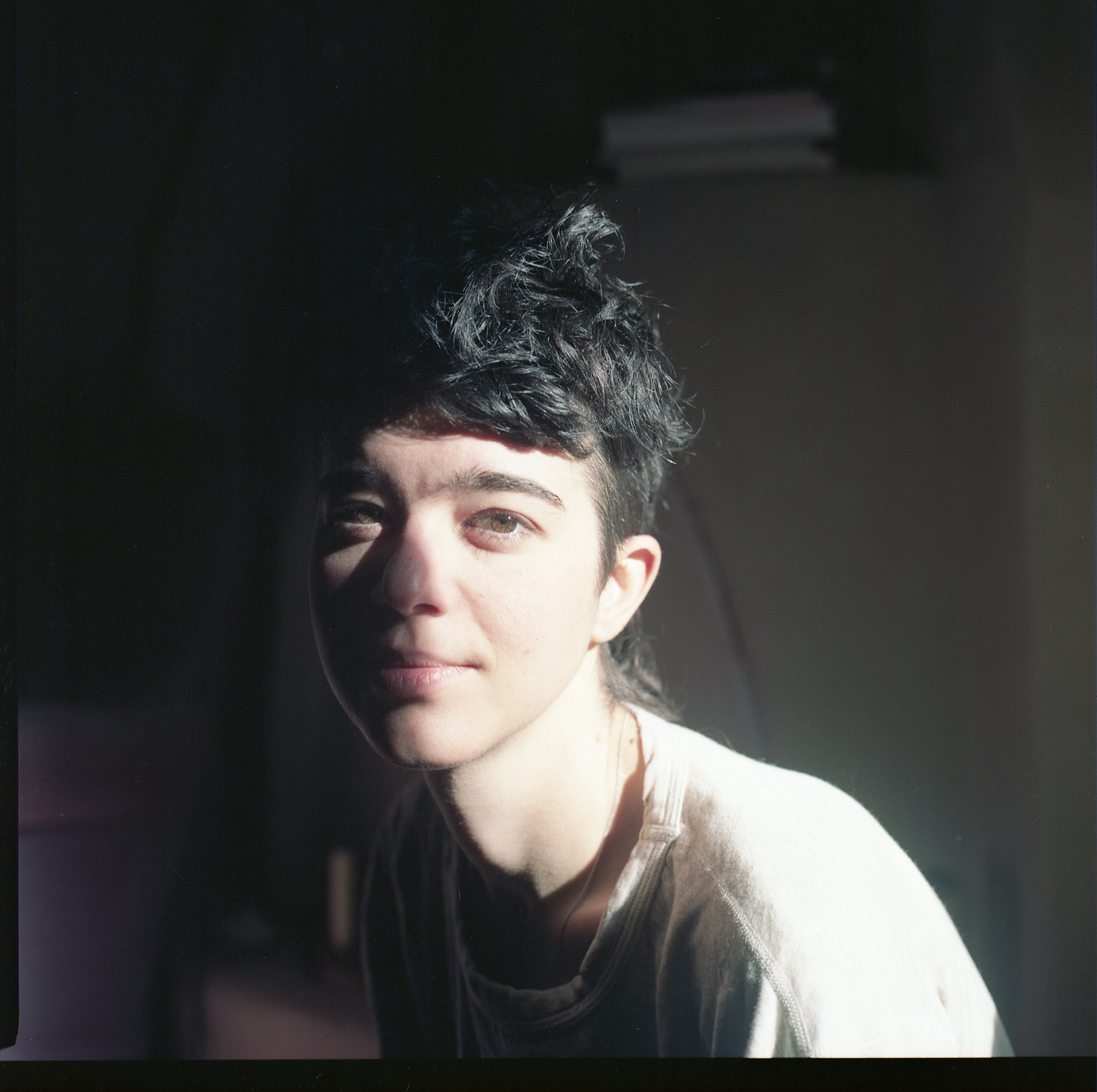
SR Lejeune, photo by Margo Greb
SR Lejeune (b. 1994, Boston, MA) is an artist currently based in Pine Plains, NY. They received a BA with High Honors from Oberlin College (2015), were a Core Fellow at the Penland School of Craft (2017-19) and hold an MFA in Sculpture from the Yale School of Art (2023). SR was the 2023 West Bay View Foundation Fellow at Dieu Donné and has been an artist in residence at the Dirt Palace (2016), lower_cavity (2023-24), the Helene Wurlitzer Foundation (2024), and Women’s Studio Workshop (2025). In Summer 2026 they will be a Bemis Center Artist in Residence and a Visiting Artist at the Ox-Bow School of Art and Artists’ Residency. Recent solo exhibitions include “sky light” at CHAMBER lower_cavity (Holyoke, MA) and “witness marks” at the Dieu Donné Jordan Schnitzer Gallery (Brooklyn, NY). They have taught workshops at the Penland School of Craft, Women’s Studio Workshop, Dieu Donné, the Yucca Valley Materials Lab and Bard College. In 2025 they received an Arts Mid-Hudson Arts & Culture Project Grant for the collaborative Hudson Valley Paper School, which they co-facilitate with Lukaza Branfman-Verissimo. They have upcoming solo exhibitions at The Richard and Dolly Maass Gallery at Purchase College (January 2026) and the Delaware Valley Artist Alliance (May 2026). They are currently a Windgate Artist in Residence at the School of Art + Design at Purchase College and are building out a manual machine shop in Amenia, NY.
More Resources
https://www.sarahroselejeune.com/
https://www.dieudonne.org/sr-lejeune-witness-marks
https://www.dieudonne.org/past-open-houses/2024/sr-lejeune
https://yaleschoolofart.viewingrooms.com/viewing-room/88-sr-lejeune-sculpture-mfa-23/
https://sculpturecenter.org/aimee-lee-and-sarah-rose-lejeune-a-consolation-of-things/