
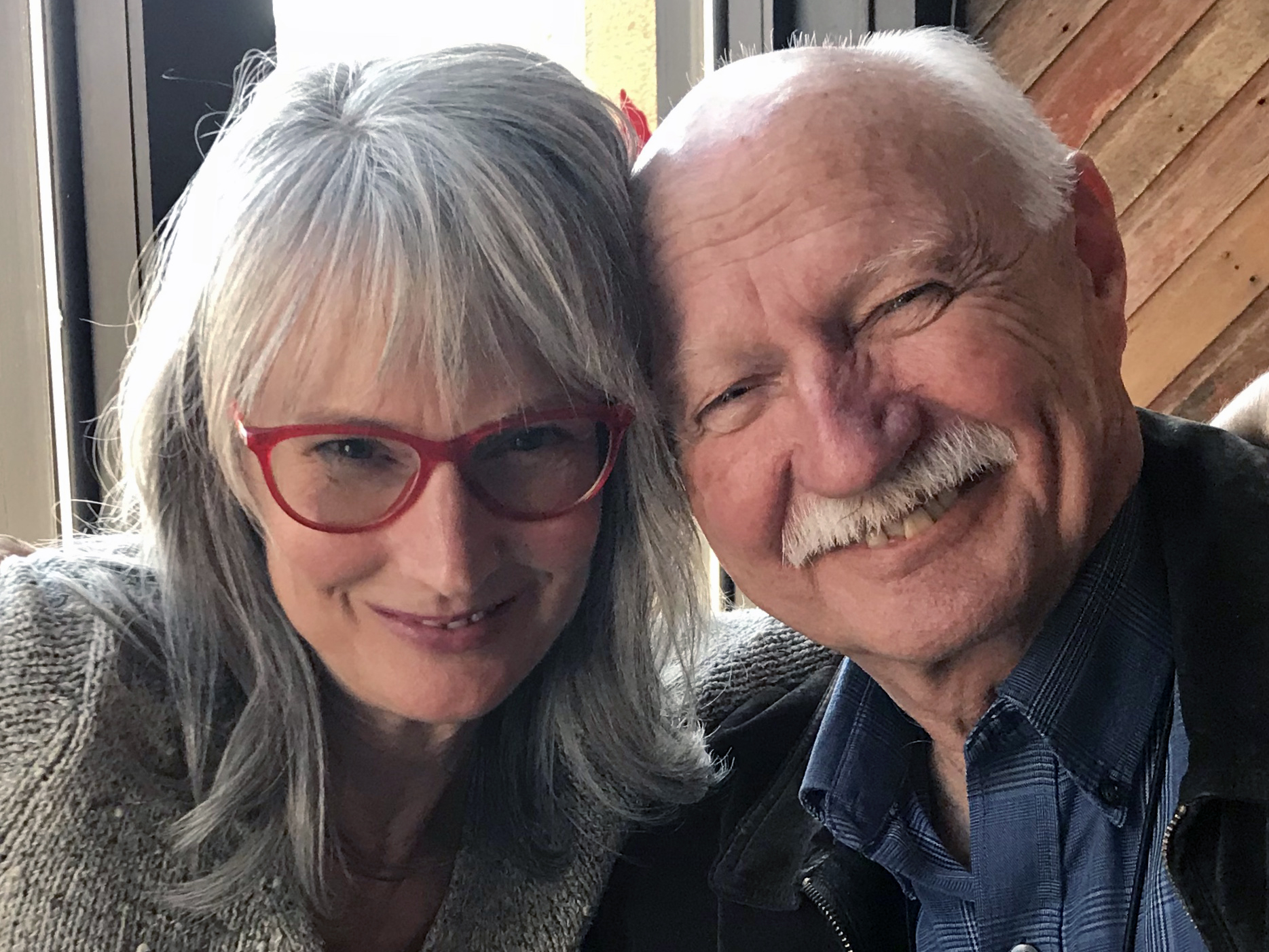
Karen Emenhiser Harris and Al Harris-Fernandez have a combined total of 100 years of experience in the arts, having worked together and separately as artists, curators, teachers, and editors in Texas, New York, and Iowa. Asymmetrical explores the warp and weft of their relationship through their different aesthetic styles, though both artists use the metaphors of abstraction in their creative work.
In every ongoing years-long conversation, whether in words–written or spoken–or through visuals, there are times when stream of consciousness prevails. Ideas pour forth seamlessly, effortlessly–tumbling, roaring, pulsing with energy between the participants, punctuated by times of quiet introspection, providing calm reflection and drawing on private inner resources before the conversation renews. Such parleys are evident in Asymmetrical, as the couple reveals their distinctive but interwoven practices, both turbulent and tranquil, through their respective mark-making.
Visual abstraction can be challenging or meditative, inviting viewers to unpack color, form, line, shape, and texture, as well as positive and negative space (the building blocks of all artwork) to enter into the creative conversation shared by the artists—conversations sometimes oblique, sometimes transparent—at times, even inexplicable to the artists themselves. The following essays reveal more about the creative lives of both artists.
-Mary Anne Redding, Senior Curator
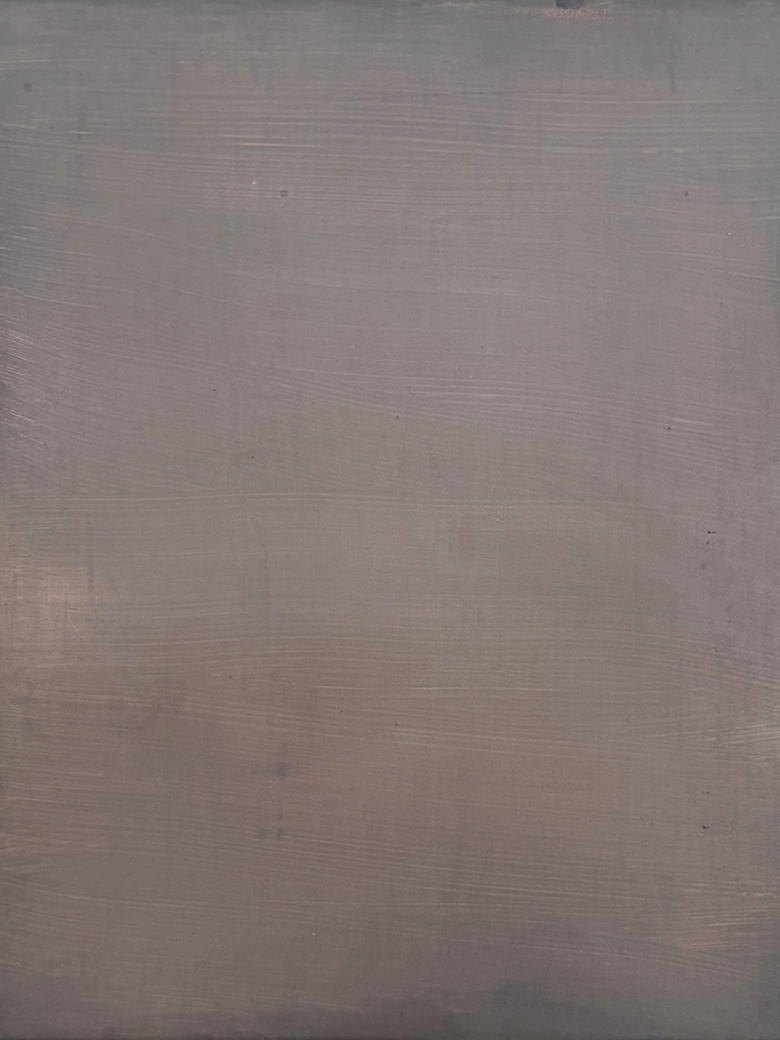
Karen Emenhiser Harris, "Pink-blue Bokeh," 2022
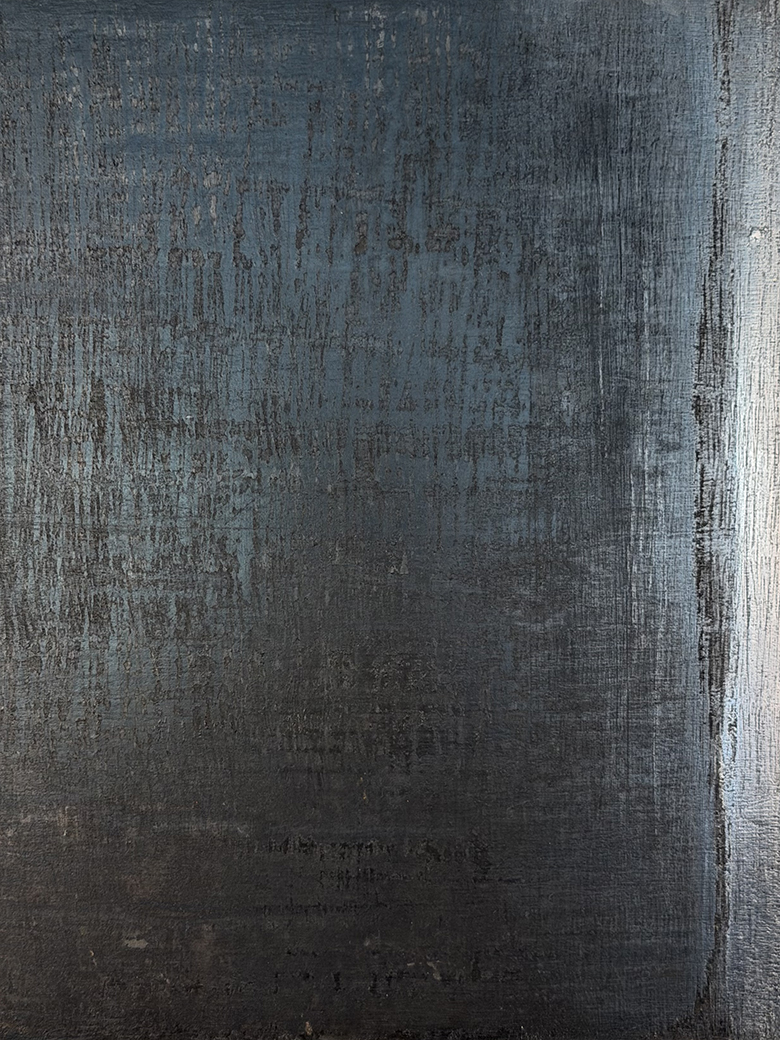
Karen Emenhiser Harris, "Dark Hour," 2021-22
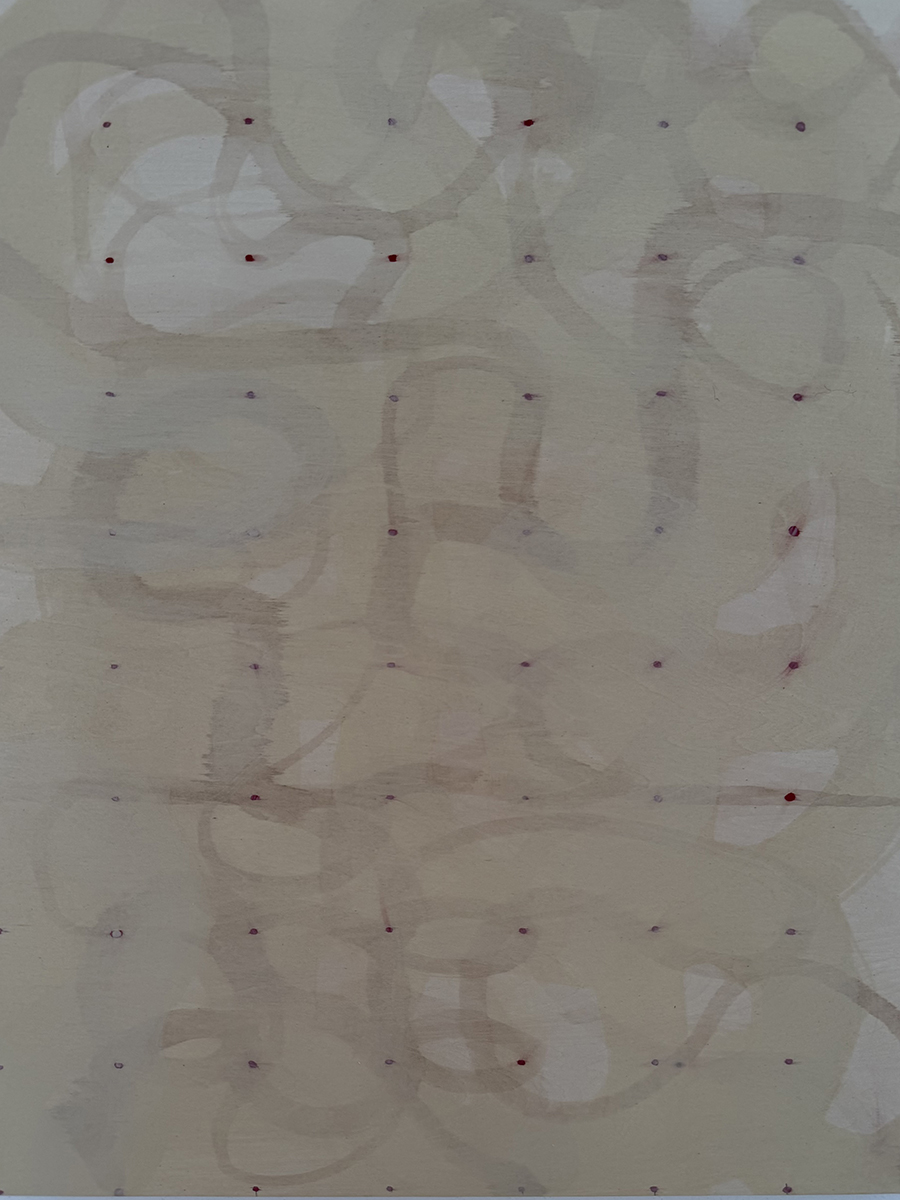
Karen Emenhiser Harris, "Wood Loops," 2026
Karen Emenhiser Harris is a visual artist, educator, and occasional curator, currently living in Sioux City, Iowa. She was born in Oklahoma, the daughter of an artist and frustrated writer. Her great aunt Edith Maida was a poet and founder of a spiritual colony near Los Angeles, California. All these circumstances contributed to her creative life. Harris studied art at the University of Oklahoma, then went to Dallas, Texas, showed her work and started writing about art for the Deep Ellum Review and the Dallas Observer. She edited the founding edition of Circa then moved to western New York with Al Harris-Fernandez to open the University at Buffalo Art Gallery where she worked with many extraordinary artists. At some point the words stopped coming; it was time to engage the silence and leave the work to her hands. Clay and wood became her mute media.
Harris’ style is a constellation of the 1970s in art, the 1980s on the highway, and the discipline of Zen Buddhism. She leans on longtime visual and emotional associations with vast stretches of unoccupied terrain, often driving through West Texas to El Paso. Most people avoid driving through that much desert; she always felt a great sense of awe at the unadorned sight of earth meeting sky. Later, Harris found herself in the Midwest surrounded by prairie or corn. She has particularly vivid memories of her first drive through rural Iowa, astonished and somewhat alarmed with the way the howling winds sculpted the snow–its keen-edged glistening and hard-packed glow.
The paintings/objects Harris makes embody moments and memories–somewhat tangential–of the spaces she’s traveled, usually avoiding specific focal points. The objects hang on the wall: slightly misshaped, mostly frontal with polished or gilded sides designed to lead the eye elsewhere. This is terrible marketing, but the work presents a sort of movement and sensitivity that the artist likes.
Harris has a Master of Arts in Humanities in Art History and Philosophy from the State University of New York at Buffalo, a Bachelor of Arts in Art History and Painting from the University of Oklahoma in Norman, and an Associates of Arts and Sciences from St. Gregory’s Junior College in Shawnee, Oklahoma.
http://www.emenhiserharris.com
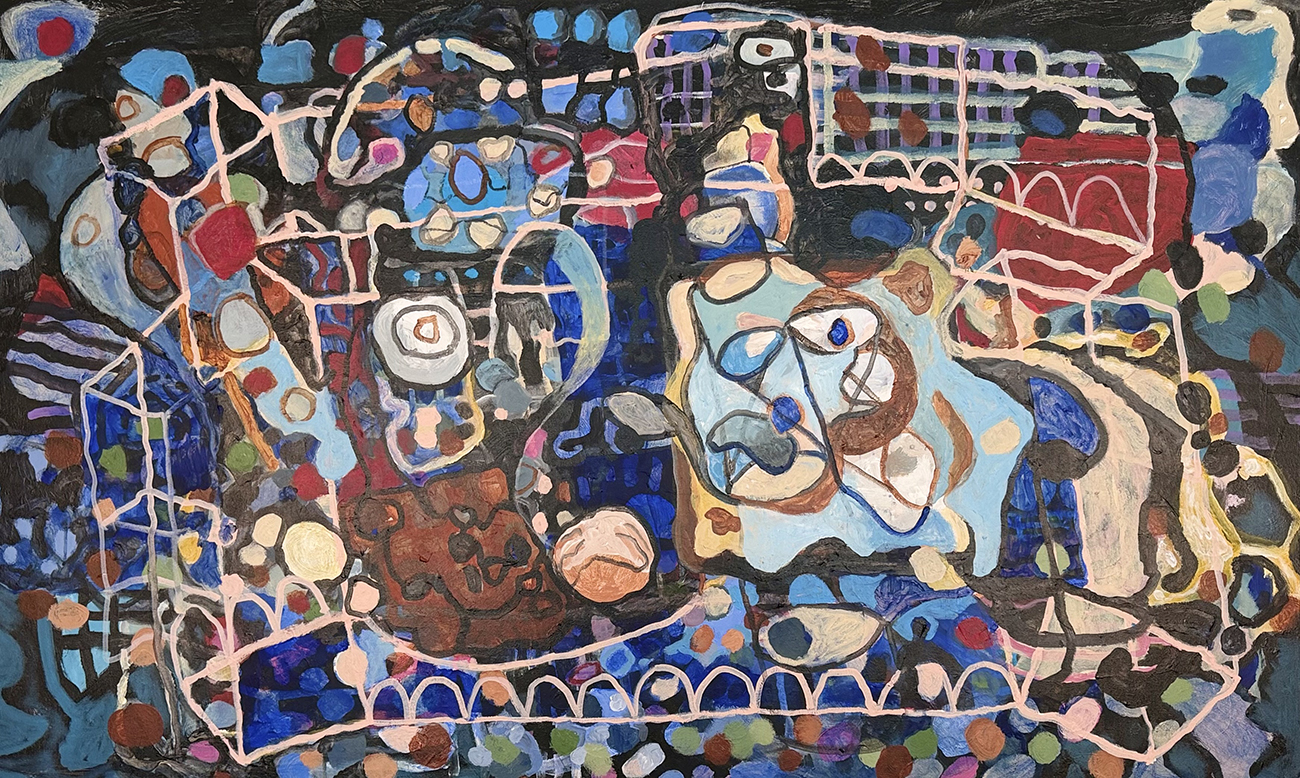
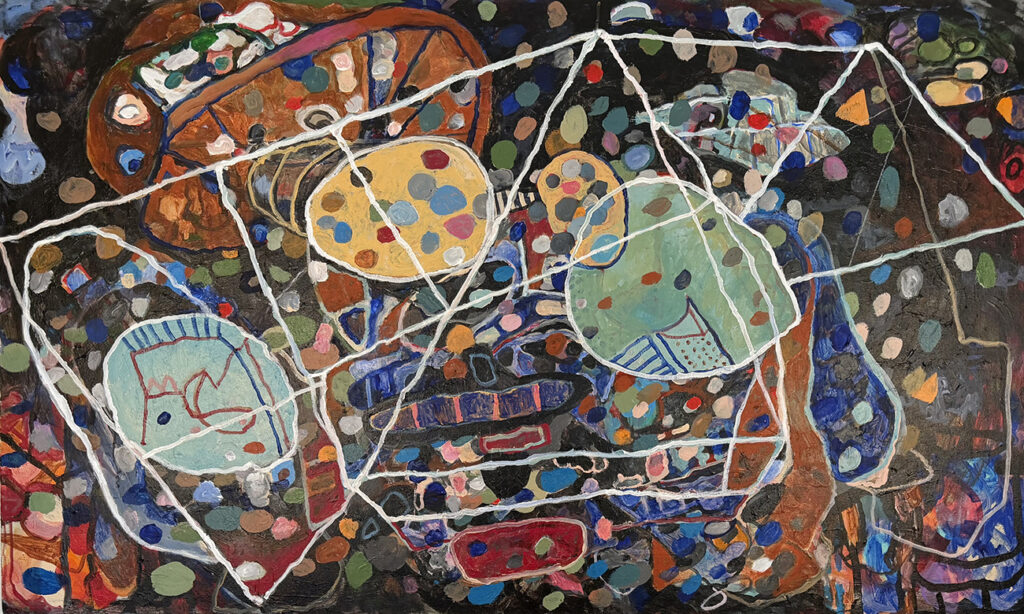
Al Harris-Fernandez, "Baby Blue," 2026
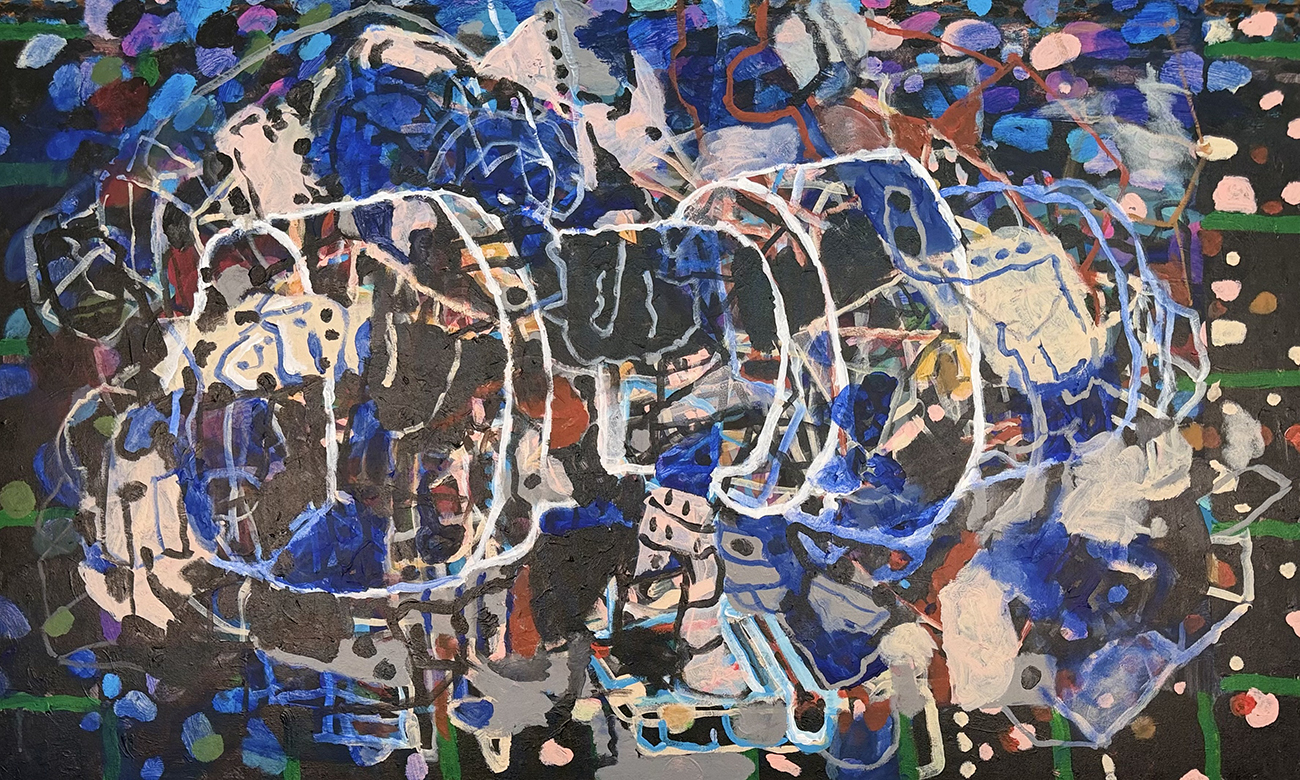
Al Harris-Fernandez, "Rotation," 2026
Al Harris-Fernandez grew up in the border town of El Paso, Texas. He started painting as a freshman in high school, later attending the University of Texas at El Paso. After graduating from college and establishing his studio practice he was “discovered” by a local collector, Mary Ethyl Thayer, who, in addition to supporting his work, introduced him to Herbert Hunt of the Dallas oil family. Through both purchases and commissions Mr. Hunt was instrumental in allowing Harris-Fernandez to make his living as a painter for several years.
Feeling stuck in a rut making representational art, he applied to graduate school, first earning a Master of Arts at New Mexico State University, then a Master of Fine Arts at Stephen F. Austin State University in Nacogdoches, Texas. During this period, he developed his ongoing interest in abstraction, developing the methodology he continues to explore and employ today, discovering–as opposed to creating–his imagery.
After producing a body of small abstract wood assemblages and transporting them around to galleries in a shoe box, Harris-Fernandez found a sympathetic gallerist in Bill Graham of Houston, Texas. The relationship resulted in regular one-person exhibitions until Graham’s death in the 1990s. A similar relationship with Dutch Philips of Fort Worth Gallery and the Dutch Philips Gallery in Dallas ended with Philip’s death, also in late 1990s. Having established himself by now as a gallery director and wanting to avoid conflicts of interest, Harris-Fernandez chose to focus on making art but not showing it in the commercial gallery system.
Harris-Fernandez developed his second career as a curator and gallery director in the non-profit contemporary art field, first at the stand-alone Bridge Center for Contemporary Art in El Paso, Texas, then The Center for Research in Contemporary Art at the University of Texas at Arlington, then serving as Director of the State University of New York at Buffalo Art Gallery. He completed his career in arts administration upon retiring in 2019 after serving 18 years as Director of the Sioux City Art Center. Continuing to be active as a practicing artist, Harris-Fernandez is currently represented by Modern Art Midtown in Omaha, Nebraska and the Moberg Art Gallery in Des Moines, Iowa.
The artist’s goal is to create images that he finds absorbing. By this, he means images that are ambiguous, not predictable, that are able to surprise him–taking on a life of their own. Harris-Fernandez’ methodology combines intuition and reflection; he approaches the canvas from all directions. Literally, he paints then rotates the canvas, paints, then rotates again. He continually paints over areas, allowing parts of the previous image to remain, thereby creating unexpected but intriguing new relationships. At some point, Harris-Fernandez arrives at the final orientation of the painting, finding the top and bottom of the image. What he finds intriguing in painting is how the formal qualities of mark making reinterpreted on a flat surface function as a reference to three-dimensional space. While he invites the unexpected, he spends time analyzing his work, deciding what to allow and what to adjust.
https://www.al-harris-fernandez.com
https://www.instagram.com/alharrisfernandez/